Introduction
Following the Industrial Revolution, design began to profoundly influence human life by facilitating purposeful socioeconomic values, such as mass production and the division of labor. Amidst the rigid materialism of mechanized industrialization, design serves as a medium that pursues a deeply rooted humanism. It expands aesthetic values globally through its unique methodology, offering profound insights and a mode of communication that beautifully elevates the quality and completeness of physical manifestations. However, the proliferation of materialism has led to a humanistic disillusionment—where the human experience becomes overly complex and degraded—resulting in a distinct alienation caused by material saturation.
Traditionally, design has been a process aimed at alleviating immediate discomfort and increasing material value. Recently, however, the boundaries of design have expanded dramatically into intangible domains, including strategic planning, management, consumer preferences, core values, and emotional experiences. Within these intangible processes, service design emerges as a domain where design’s value is exponentially amplified. Service design contextualizes creative environments, co-creation, and value distribution, thereby enriching and expanding traditional design paradigms.
The process of service design closely mirrors the structural transformation of an ecosystem. To resolve a given problem, service design relies on field investigation and user observation to deconstruct and redefine the issue, thereby uncovering hidden values and latent system defects. Solutions and insights generated in this process are shared and iteratively manifested through collaborative feedback, eventually advancing to a visualization stage within the service design framework. This approach fundamentally departs from the passive, task-oriented approaches of the past; instead of merely executing predetermined tasks, service design establishes an active, generative process that identifies and addresses organic needs within the ecosystem.
This study identifies critical practical factors in service design, specifically the expansion of design domains through non-linear methodologies and a virtuous cycle framework. However, if designers lack a clear understanding or awareness of service design, there is a risk of overextending the research scope, leading to the inefficient observation of irrelevant domains. Therefore, to achieve sustainable design, maintaining an active, ecologically grounded observation of the immediate environment and fostering precise contextual perception must be recognized as essential roles for the modern designer.
A theoretical background
As defined by the Service Design Council, service design applies user-centered, contextual research methodologies to examine both tangible and intangible elements (including people, objects, actions, emotions, spaces, communications, and schematics) across all stages of the user journey (including processes, systems, interactions, and emotional roadmaps). This holistic approach aims to identify the latent needs of diverse stakeholders and materialize them through creative, multidisciplinary, and collaborative design practices. Consequently, service design serves to enhance effective, efficient, and compelling experiences for both customers and providers. Unlike traditional design disciplines, it does not begin with a predetermined physical artifact; instead, it investigates intangible dimensions from the initial research phase, executing a comprehensive and analytical framework driven by genuine consumer needs (Gardner,1993)(Fig. 1).
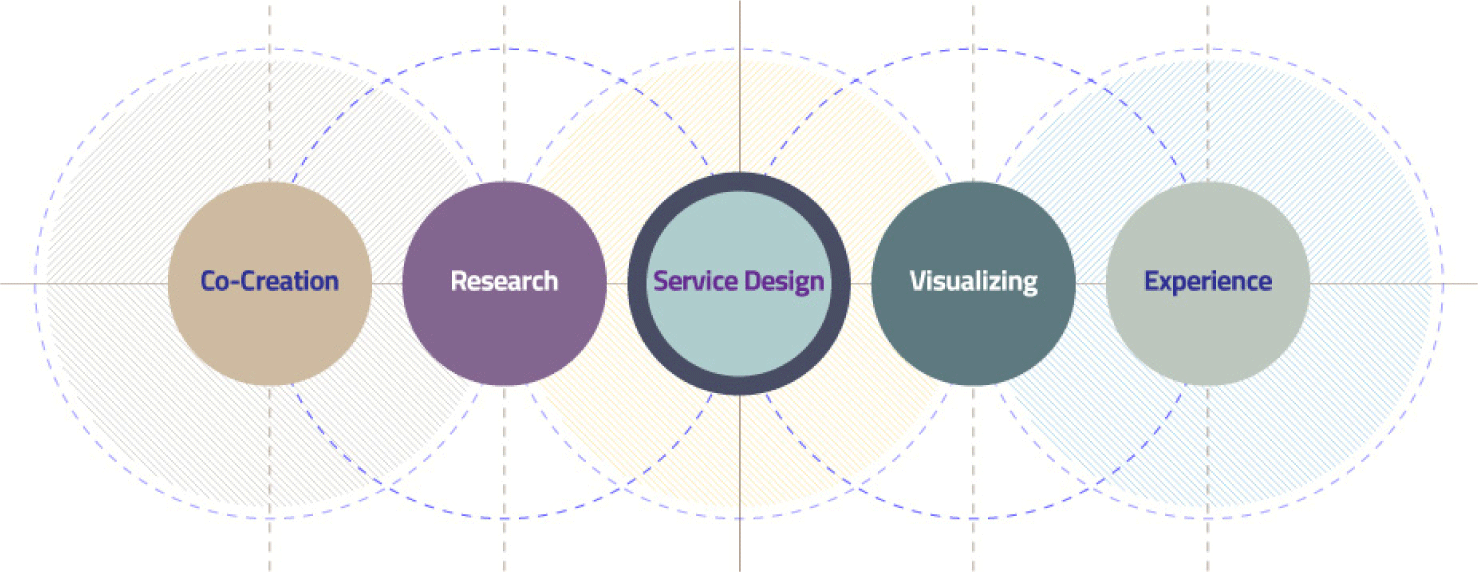
Grounded in design research, service design begins with an environmental scanning to uncover latent needs, explicit customer demands, and unacknowledged requirements. The insights and issues derived from this research are subjected to in-depth analysis involving both direct and indirect stakeholders, as well as end-users, to employ methodologies that define and resolve core challenges. Furthermore, systematically observing and analyzing stakeholder experiences allows these identified issues to be visibly manifested. This visualization process aims to contextualize all possible elements; even dimensions requiring intricate explanations are subjected to visual mapping. Consequently, prototypes are generated or presented through illustrative techniques. This service design methodology serves as an integrative framework bridging design planning, factor analysis, and final design artifacts, establishing visual analysis as the core essence of service design.
A defining characteristic of service design is its capacity to capture all problematic factors emerging within the ecosystem of relational interactions. By leveraging empirical data, it synthesizes these factors into structured visual representations, thereby establishing actionable directions for improvement rooted thoroughly in user experience (UX).
The global economic paradigm is shifting its core axis from manufacturing-based sectors to service-driven industries. The economic share of the service sector within Organisation for Economic Co-operation and Development (OECD) member nations has expanded consistently, with South Korea demonstrating a parallel upward trajectory. Structurally, the scope of services encompasses virtually all economic domains excluding agriculture, fisheries, and traditional manufacturing. Propelled by advanced technology and knowledge-based structures, this expansion increasingly permeates labor, consulting, entertainment, and education markets through an enhanced division of labor and diverse value-creation processes. In industrial economics, the fundamental nature of services is traditionally defined by four inherent attributes: intangibility, inseparability, perishability, and heterogeneity (Hwang, 2013).
As corporate products evolve, they increase their baseline value and become deeply intertwined with consumer responses; however, once a product sector reaches maturity, it inevitably faces commoditization. Consequently, manufacturing firms find it increasingly difficult to maintain a distinct competitive advantage through the physical product alone. In this context, adopting a Product-Service System (PSS) model becomes an inevitable strategic imperative. While improving the product itself remains fundamental, sustaining long-term competitiveness requires innovative product transformation and the creation of new business models. Peter Drucker famously emphasized that the core purpose of a business is to create customers through continuous innovation, a principle that underscores the necessity of servitization in elevating product value. Furthermore, Joseph Pine, in his TED talk “What Consumers Want,” elucidated why the global market must transition into an era of service and experience-driven competition. He highlighted the inevitability of product commoditization and the critical need for integrating services to enhance product value, defining the strategic direction of this differentiation as “customization.”(Hwang, n.d.).
In promoting the core value of design, a more profound dimension of customization entails delivering user-centric value at the precise time and location preferred by customers. Consequently, traditional manufacturing must evolve; beyond mere production and timely delivery, firms must supply offerings in tailored formats and methodologies that align with explicit customer desires. Furthermore, this comprehensive approach must encompass continuous lifecycle management and post-purchase value enhancement well after the initial sale (Fig. 2).
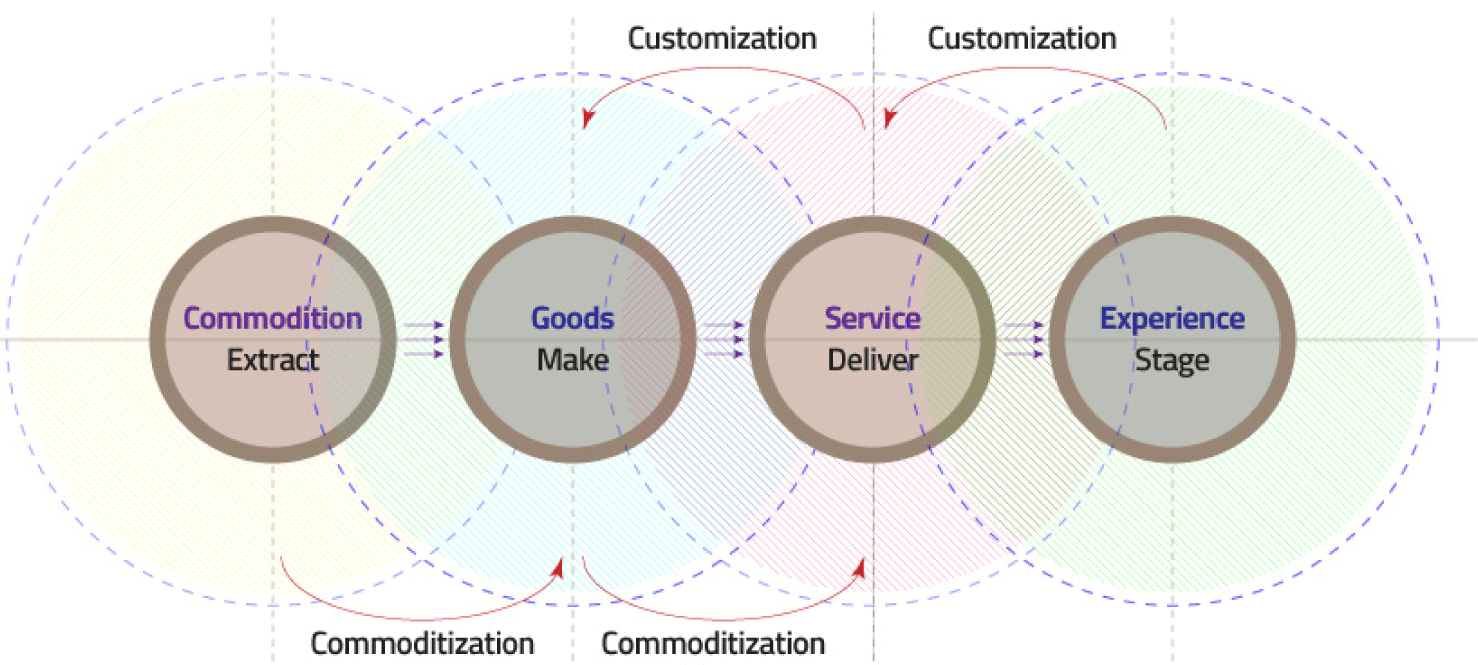
The transition from manufacturing to service-driven economies stems from shifting benchmarks of traditional value and the inevitable commoditization of product value. Historically, the manufacturing paradigm prioritized delivering a single, defect-free finished product; however, the contemporary importance of the service industry is underscored by the heightened demand for personalization and customization. This shift is accelerated by diverse customer requirements, such as real-time updates of digital content and embedded services. Consequently, modern manufacturing evolves by blending production with services, where service expansion is seamlessly integrated throughout the entire manufacturing stage. This evolution extends beyond mere product-service bundles, ultimately enhancing the intrinsic value of tangible goods by providing unprecedented, novel services.
Creativity and process in design
The manifestation of creativity in design comprises two core dimensions: originality and feasibility. For an idea originated by a designer to be recognized as creative, it must derive novel value while remaining viable within the objective perception of society. Furthermore, when creative and innovative ideas are successfully executed, they are recorded as tangible creative achievements. While numerous creative ideas exist, their successful implementation into appropriate, innovative products that align with the business environment and consumer preferences is ultimately determined by market responses within the framework of sustainable creativity. As several scholars have noted, the fundamental concept of creativity lies in both novelty and acceptability; that is, creativity is the capacity to generate “newness,” but it must remain appropriately novel within an established cognitive tradition. Ultimately, the ability to reorganize conventional information to generate innovative products, artworks, or concepts that yield significant intrinsic value represents a comprehensive approach to defining creativity (Hwang, n.d.).
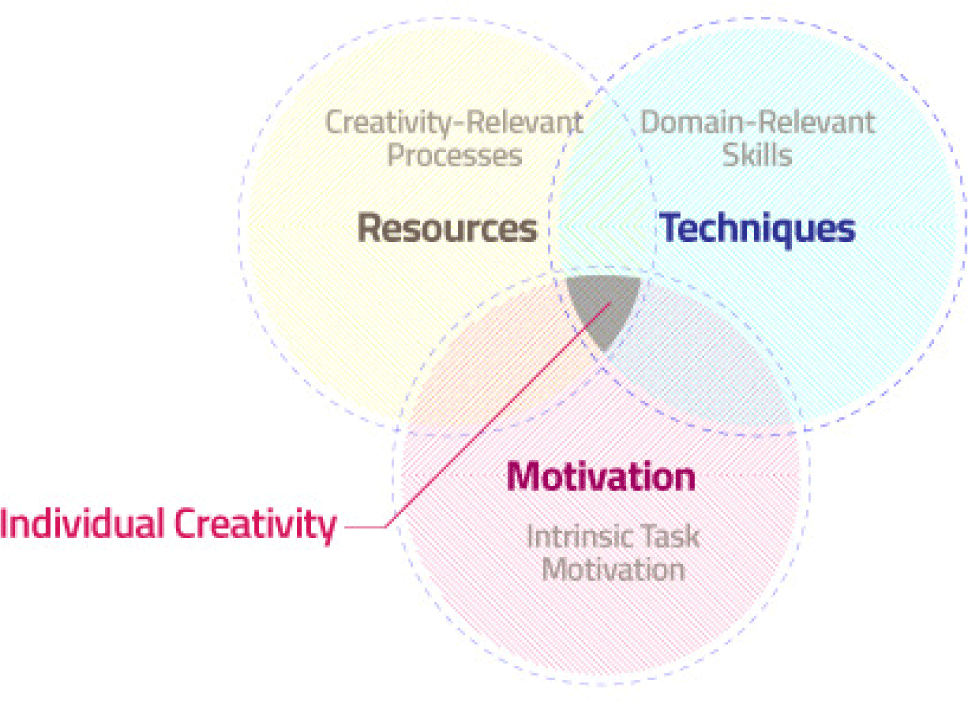
In summary, the concept of creativity stems from an individual’s dual capacity to express qualities that are both “novel, original, and unexpected” and “appropriate, useful, and adaptive.” A multidimensional approach—which views the manifestation of creativity and its modulating variables as the dynamic interaction of active elements, rather than from a passive design perspective—is gaining significant traction. Within the design discipline, human creativity stands in stark contrast to the universalized outputs generated by AI. This is because creative visual values must be respected based on their unique artistic integrity and context, rather than being reduced to mere behavioral or environmental metrics. Reflecting this human-centric perspective, Teresa Amabile’s seminal model posits that individual creativity comprises three essential components: domain-relevant skills, creativity-relevant processes, and intrinsic task motivation (Fig. 3).
Steve Jobs once explained the manifestation of creativity by stating, “Creativity is just connecting things.” As he suggested, creative individuals do not necessarily perform extraordinary feats; rather, they discern subtle phenomena overlooked by the general public and conceptualize them as problems through deep insight. This capacity allows designers to generate novelty by synthesizing their accumulated experiences and memories. Consequently, creative designers often possess either a broader range of experiences or a deeper reflection upon them compared to their peers. Regrettably, such extensive experiential depth is rare. Many designers lack the diverse experiential repertoire required to bridge existing memories with novel creative catalysts.
Creativity originates from identifying underlying relational principles based on prior experiences and synthesizing them with newly discovered facts—an empirical creative activity. Indeed, creativity is inherently ubiquitous. The interplay between diversity and connectivity plays a pivotal role in fostering innovation. Establishing relational networks through these connections weaves diverse experiences into a novel narrative, whereby the dynamic value of design is exponentially amplified by the diversity of ideas.
Creativity in design manifests as a proactive process, delivering optimized products and services by preemptively capturing and expressing consumers’ latent desires. Accordingly, service design addresses these essential requirements by identifying systemic flaws and resolving user discomfort before conventional design requests even occur. This proactive approach has led to the widespread adoption of service design as a foundational methodology for resolving complex contemporary design challenges.
Etymologically, the conceptual definition of design originates from the Latin designare, which signifies to designate, express, and execute according to its lexicographical meaning. Design is inherently tangible and pragmatic rather than abstract; thus, no design discipline can be conceptualized or visualized apart from the intrinsic value of its physical manifestation. In light of this conceptual definition, the mediating environment of design enables the deduction of forms from diverse streams of information and empirical data. Through these multifaceted interpretations, design is established as a systematic domain of formative planning for specific utilitarian purposes, such as industrial products or architecture.
Epistemologically, knowledge is bifurcated into “knowing through cognitive action” and “knowing through practical action.” The former is deeply aligned with the rationalist tradition, whereas the latter represents an empiricist paradigm. From a rationalist perspective, knowledge is acquired through structured intellectual and mental operations, rather than being a mere byproduct of sensory experiences or empirical perceptions (Korea Service Design Council, n.d.).
The design creation process is deeply integrated into the fabric of human existence, serving as an essential component—or the entirety—of daily life. This encompasses fundamental consumer needs, including food, clothing, and shelter, while simultaneously aligning with the broader expansion and progression of established value structures (Fig. 4).
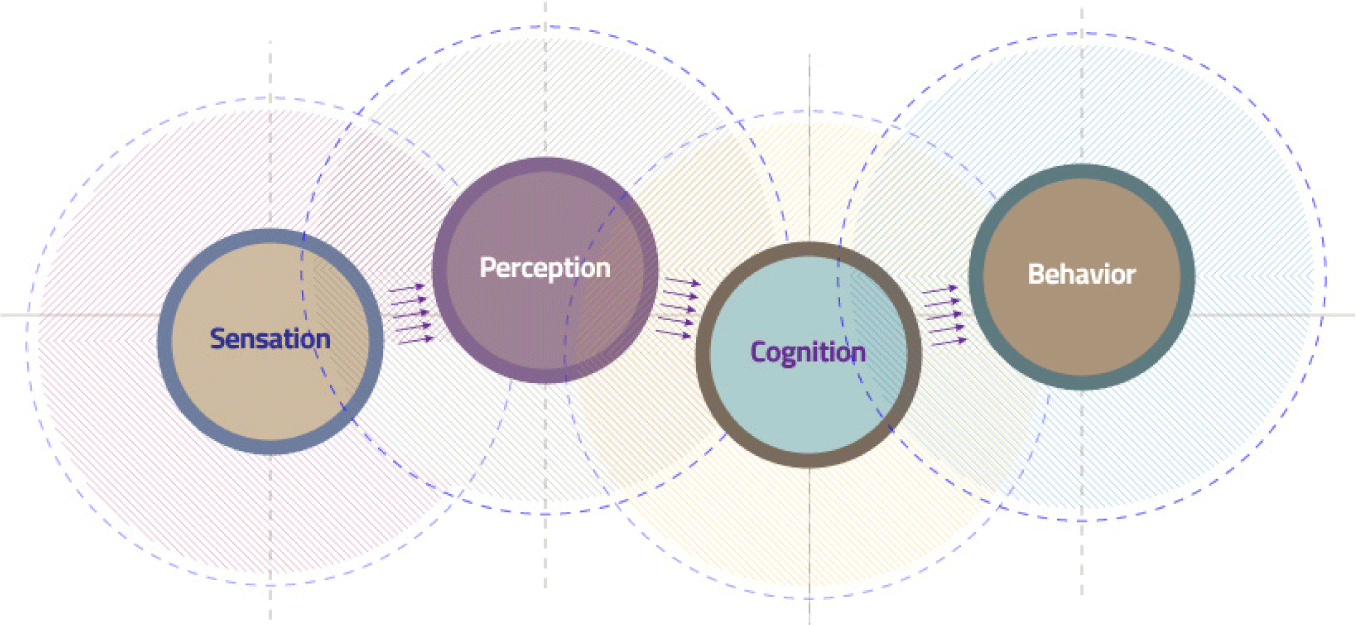
When comparing the conceptual attributes of knowledge with those of design, knowledge represents a process of cognitive action, whereas design constitutes a process of value acquisition. In this context, the value acquisition process in design can be understood as a sequential progression; it expands the repertoire of human tools by transitioning from initial cognitive behaviors rooted in knowledge into the actual realization of value.
While the convergence of knowledge and design was previously limited to aesthetic information processing, this study seeks to reorient the perspective of design through the medium of knowledge. Unlike the requirements of the past information age, design in the knowledge era must be established as an adaptable, organic framework. This framework should not remain static; rather, it must be dynamically reconfigured into evolving states through continuous user interaction.
Rather than fundamentally diverging in form, the evolutionary bridge between traditional design and service design emphasizes embedding proactive usability into core design values. In this transition, service design serves as an active alternative for identifying pragmatic solutions tailored to shifting consumer preferences. Optimizing design research requires a comprehensive understanding of target consumers, systemic objectives, and situational contexts, alongside a balanced awareness of the strengths and limitations of various research techniques. Given that AI operates with incomparably greater speed and analytical capacity than humans in this domain of reasoning, designers should leverage AI to determine optimal research methodologies; meanwhile, humans must assume a strategic oversight role—directing, evaluating, and validating the synthesized outcomes through rigorous supervision.
In service design, research frameworks approach user cognition by visualizing empirical phenomena, shifting away from a reliance purely on quantitative metrics and statistical balance checks. Because the humanities, social sciences, and design disciplines deal with phenomena where objective figures are elusive, these fields inherently demand deep insight driven by qualitative approaches. However, establishing standardized qualitative methodologies remains a challenge. Since most qualitative inquiries utilize non-mathematical analysis and non-numerical, unstructured data, service design research must simultaneously triangulate these insights with quantitative data. Specifically, while traditional design research narrows its scope by deductively testing predetermined hypotheses, service design operates on an inductive system—identifying root causes to uncover hidden consumer desires. This is demonstrated in representative service design methodologies, such as scenarios, service blueprints, and personas, which identify causal relationships by documenting and analyzing deeply contextual, idiosyncratic user phenomena.
The standard service design pipeline is structured through identifying core challenges, conducting stakeholder analysis, and mapping service blueprints. This framework facilitates iterative idea generation, detailed blueprint refinement, and systematic project evaluation. This sequence is epitomized by the British Design Council’s Double Diamond model—a seminal methodology in service design that guides practitioners through the distinct phases of multi-layered discovery and strategic problem definition (Fig. 5).
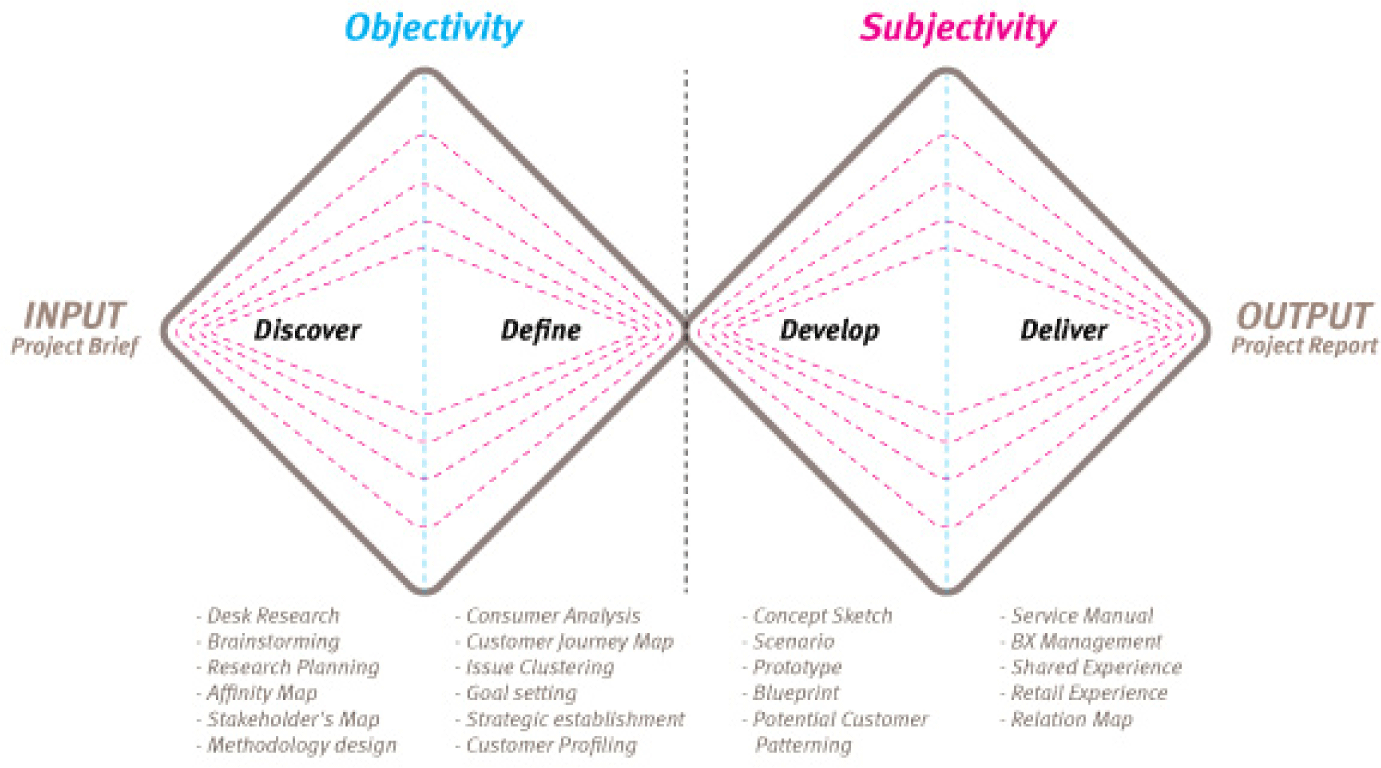
Case studies, ethnography, grounded theory, behavioral research, and phenomenological research represent traditional qualitative methodologies that facilitate problem-solving and verification by contextualizing empirical phenomena. Accordingly, the overarching pipeline of service design research can be firmly classified within the scope of qualitative inquiry, while simultaneously integrating quantitative research methodologies to validate objective facts and inferred data. By approaching service design through this integrated methodological framework, researchers can uncover the user’s latent, unarticulated problems, ultimately enabling the seamless transfer of authentic design values that users genuinely require.
The paradigm shift within the design field highlights that methodologies constituting the value chain are becoming increasingly non-linear, where a non-linear, multifaceted structure plays a pivotal role in amplifying design value. This non-linear value chain is integrated into design practices through various methodologies because conventional linear approaches fail to meet evolving user preferences. Consequently, this transition expands the absolute value of design and establishes it as a sustainable methodology.
In traditional design, standard practice dictated that design execution commenced only after establishing a clear, teleological proposition to resolve a given problem. The designer’s role was confined to fulfilling client commissions by applying methodologies that enhanced creative imagination and aesthetic value, characterized by a passive, vertical hierarchy between the client and the designer. Consequently, traditional design focused heavily on generating linear outcomes. Conversely, the service design methodology prompts a shift toward horizontal thinking between clients and designers, introducing frameworks that comprehensively interpret, observe, and synthesize diverse perspectives to isolate core controversies and root causes of systemic problems.
Non-linear design, rooted in digital media, seeks to resolve systemic challenges from novel perspectives by analyzing existing problems and co-creating value among designers, clients, and diverse stakeholders. This non-linear design framework expands across digital platforms by integrating user interface (UI) design, UX design, and broader experiential domains. Leveraging the relational value of hyperlinks—the definitive non-linear medium of digital ecosystems—the service design platform utilizes comprehensive research methodologies to uncover latent, previously unaddressed problems within the design process (Kim, 2009).
Historically, design was often reduced to merely translating explicit information into aesthetic surface visuals. However, driven by a profound paradigm shift that continually expands the scope of the discipline, design is no longer treated as a peripheral accessory to product development. Instead, contemporary product transformation and innovation are explicitly driven and dictated by design-centric imperatives. At this transitional juncture, the intersection of knowledge and design requires an adaptable stance toward mediating environments and user-driven interactions. This convergence must manifest as a mutable framework—an intangible, dynamic matrix that can be transformed, modified, and reconfigured by the user. Ultimately, this integrated framework of knowledge and design establishes the foundational conditions for a flexible, participatory digital paradigm.
The virtuous cycle structure of AI design
Distinct from other disciplines, a designer’s competence begins with a profound, meta-cognitive understanding of design thinking, encompassing objective insights into individual execution skills and a heightened critical problem consciousness. Designers must possess specialized expertise alongside exceptional observational and analytical capabilities. A designer’s creativity is uniquely highlighted through the capacity to decipher user requirements from a human-centered perspective, identify root causes, and dissect complex challenges by utilizing persona-based observation. Supported by this observational and analytical rigor, the capacity for universal and objective judgment acts as a definitive catalyst for expanding the absolute value of design.
The process through which users secure subjective evaluation criteria constitutes the establishment of personal value systems. In terms of synthesizing and applying empirical knowledge, learned memories, and information to co-create design value, individual design standards and aesthetic preferences vary significantly based on these internal value structures, allowing user demands to be interpreted through multifaceted perspectives. Within the design discipline, value manifests as an experiential synthesis; empirical experience serves as the foundational medium that catalyzes and activates this perceived value.
The interplay between design and technology is inherently symbiotic, with technological paradigms consistently defining and shaping new design domains. Technological advancements drive the proliferation of novel products and services, stimulating the consumption of design artifacts and reshaping the ecosystem’s virtuous cycle by disrupting legacy industries and markets.
To be successful, a business model must secure both competitiveness and long-term sustainability. Competitiveness hinges on a robust “customer value proposition” and effective “revenue mechanisms,” whereas sustainability demands a continuous “virtuous cycle” and absolute “inimitability.” A competitive business model materializes when a well-defined value proposition successfully converts a targeted customer base into sustainable revenue streams. Furthermore, value-creating activities must establish an organic, virtuous loop, safeguarding the system against competitor replication to ensure long-term viability. Ultimately, the design ecosystem achieves relational continuity by balancing diverse environmental variables and structural interactions within a continuous framework of shared relational values (Hwang, 2013). Design value generates a continuous cycle of user satisfaction materialized through user adoption and engagement, where empirical experience establishes the critical logic guiding today’s highly proactive consumers. The functional value delivered by designers facilitates the acquisition of novel utility by mitigating pre-existing user friction and systemic pain points through the logical framework of creative generative mechanisms. Ultimately, design is defined as an iterative process of eliminating problematic barriers and optimizing systemic value through creative problem-solving.
The intrinsic value of the service design process is manifested by comprehensively interpreting core challenges and isolating causal factors to engineer optimal solution methodologies. The distinct advantage of service design methodologies over traditional approaches lies in its rejection of pre-formulated client briefs; instead, it focuses on identifying root challenges directly at user touchpoints. While legacy design paradigms operate primarily to solve predetermined problems, service design fundamentally shifts the locus of problem definition from the client to the end-user and organizational stakeholders. Consequently, the service design platform initiates the systematic investigation and observation of relational dimensions for ecosystem regeneration. Within this framework, its primary platform role is to facilitate the co-sharing of analytical data and the collective realization of meaning through co-production and shared experience.
Within the design discipline, usability testing is established as a rigorous, scientific research process dedicated to identifying systemic flaws and optimizing UI. Its objective is to enable consumers to navigate multifaceted product functions intuitively and with minimal cognitive load. The scope of usability testing spans all dimensions where design values are materialized, encompassing both tangible goods and intangible services. Generally, usability testing measures and evaluates task execution metrics, performance rates, and critical error typologies by synthesizing behavioral data generated under simulated real-world conditions guided by structured task scenarios. By executing granular user-satisfaction evaluations for discrete UI elements, researchers isolate optimization factors and minimize friction points to enhance overall product usability. This diagnostic framework uncovers the root causes of operational errors, facilitates iterative refinements, and systemically maps the user’s interaction paths with interface modalities.
As the economic imperatives of design expanded and the producer-consumer relationship formalized, producers increasingly focused on manufacturing commodities designed to artificially stimulate purchasing desires, rather than addressing genuine consumer needs. The organizational objective shifted away from empathetic user exploration and designing essential utilities, moving instead toward pushing marketable commodities onto the consumer base. Under this paradigm, product value remained confined to transactional acquisition through purchase. Consequently, intangible values and consumer empowerment stagnated, perpetuating a reductive cycle of transactional production and consumption. Ultimately, consumer attitude originates from a holistic perception of design, modulated by both prior experience and aesthetic taste—a paradigm heavily mirrored in the user satisfaction frameworks found in media epistemology.
Design fundamentally constitutes an iterative process that establishes a circular relationship among tangible and material properties. However, as the discipline expands into the invisible service sector, service design evolves to systematically uncover and satisfy latent consumer and user requirements. Within this framework, design serves to extract and optimize value for production and distribution across both tangible and intangible goods, finalizing the utility acquired by the end-user.
Non-linear design represents a paradigm shift away from the sequential, page-by-page continuity inherent in legacy print media. Enabled by digital hypermedia, non-linear design utilizes hyperlinks to activate dynamic node transitions, requiring a fundamental redefinition of design methodologies. While linear design allows users to grasp a holistic context through explanatory, sequential environments, non-linear design—despite the challenge of navigating fragmented path continuities—excels by allowing users to seamlessly navigate interconnecting links and nodes. These links and nodes form the structural building blocks of non-linear environments, acting as a critical catalyst for the active, personalized customization of digital and web media while delivering enhanced value-add to users. This virtuous cycle manifests as an organic touchpoint facilitating bidirectional communication within the network ecosystem.
This non-linear dynamism occurs at the intersection of a network’s physical infrastructure and its logical cycle. This virtuous loop, driven by non-linear integration, ensures that customized content paths establish highly optimized UX. The seamless aggregation and extraction of information catalyzed by these fluid page transitions are epitomized by advanced platforms like Google Image Search. Consequently, content aggregation platforms serve as prime examples of interfaces that allow users to customize frequently accessed services. Ultimately, the virtuous cycle of non-linear design amplifies experiential utility. This functional worth, distinct from the producer’s self-contained utility, is conceptualized as social use-value. By moving beyond the rigid constraints of traditional linear structures, non-linear design significantly lowers informational barriers, enhances user convenience, and fosters a sustainable, value-generating ecosystem.
As anticipated, the paradigm shift within the design discipline leveraging AI has already commenced, instigating a transformative wave of unimaginable magnitude. Historically, design has engaged in the creative analysis of information and the profound exploration of latent value systems within mediating processes. Crucially, design has not evolved in isolation; rather, its evolutionary trajectory reflects dynamic consumer choices and shifting behavioral preferences driven by the perceived novelty of changing cognitive value systems.
In light of these dynamics, this study comprehensively encapsulates the dimensions of knowledge corresponding to diverse media environments, examines the correlation between AI and design through the medium of knowledge, and elucidates the structural probability of AI-driven design to explore the horizons of expanding design paradigms. For humans, design-oriented behavior emerged at the dawn of civilization as a means to decipher the world’s order and cognitive frameworks. By compensating for physiological vulnerabilities relative to wild fauna through adaptive defense mechanisms, humanity expanded its survival strategies, acquired technical utility, and established a technological reliance on artifacts that catalyzed the incremental advancement of human civilization. As Homo Faber, humans achieved the foundational capacities that drive instrumental expansion. This technological extension of human sensory organs subsequently fostered the creation and design of multifaceted tools, continuously refining a more convenient and utilitarian environment. Through this amplification of social value, the production and design of artifacts have become the definitive catalyst for broadening human perceptual frameworks.
Ultimately, design operates as a holistic enterprise that elevates the quality of human life and enriches the techno-cultural environment. Every artifact and spatial context encountered in daily existence serves to justify the expansion of creative, user-centric benefits through design. Because humanity inherently seeks transgressive possibilities, individuals continuously strive to generate unprecedented design outcomes that transcend established benchmarks. Amidst these shifting value systems that augment human prosperity, design is never static; it continually pursues novel utility relative to historical standards, modulated by client objectives, shifting consumer attitudes, and socio-environmental contexts. Originating from the instrumental imperatives of primitive survival, design has inevitably evolved to harmonize with contemporary lifestyles in response to technological acceleration and socio-cultural transformations. Consequently, design has shifted from merely sustaining daily existence to encompassing meta-design practices focused on validating design’s intrinsic worth, generating multifaceted creative variations and behavioral typologies through rigorous value verification.
Conclusion
When outcomes implemented through service design methodologies present an experiential pathway that enhances user accessibility and convenience—rather than merely delivering static, superficial aesthetics—the virtuous cycle of design value expansion can be firmly classified as an affordance-driven design approach. Based on empirical data derived from quantitative frameworks, AI-driven service design methodologies systematically ground qualitative insights into rigorous analysis, integrating population metrics and sample data. Within this synthesis, a truly valuable service design process materializes only when objective persuasion is achieved through the systematic observation and contextual contrast of qualitative phenomena.
In recent years, the domain of AI-driven service design has been ubiquitously applied across the entire design spectrum. This universal applicability stems from the inherent objectivity achieved through service design’s diagnostic investigation and analytical rigor. Consequently, service design serves as a foundational problem-solving methodology utilized not only in public design but also seamlessly integrated into product, environmental, and visual design disciplines.
The definitive conclusion drawn from this study is that as the design paradigm shifts toward user-centered ecosystems, the core responsibility of design is to precisely isolate, specify, and embody latent user requirements through the designer’s strategic rigor and tangible contributions. Ultimately, the creative essence of design lies in its problem-solving capacity to uncover unprecedented value. This imperative underscores the necessity of non-linear design triggered by the technological expansion of media ecosystems. Design uncovers novel challenges by systematically solving existing problems and diagnosing structural deficiencies in legacy systems, thereby engineering a resilient, virtuous cycle of design. While design has historically been recognized through the singular lens of creation, contemporary users demand a profound shift—one where previously acquired values are dismantled, and new needs emerge through the continuous cycle of generation, maturation, and obsolescence. In the final analysis, the quintessential role of design is to diagnose, correct, and transform current systemic barriers to foster the continuous replacement and optimization of human-centered values.